Greek Association of Supply Chain Management at Circular Ports:
Connectivity, Corridor Strategy and Sustainable Port Development
A strategic discussion on the future of the Aegean–Black Sea axis, regional connectivity, and the role of ports and logistics corridors in Southeast Europe.
| Event: Circular Ports | Format: International forum / panel discussion |
| Role: Co-organizer & panel participation | Representation: President of Greek Association of Supply Chain Management |
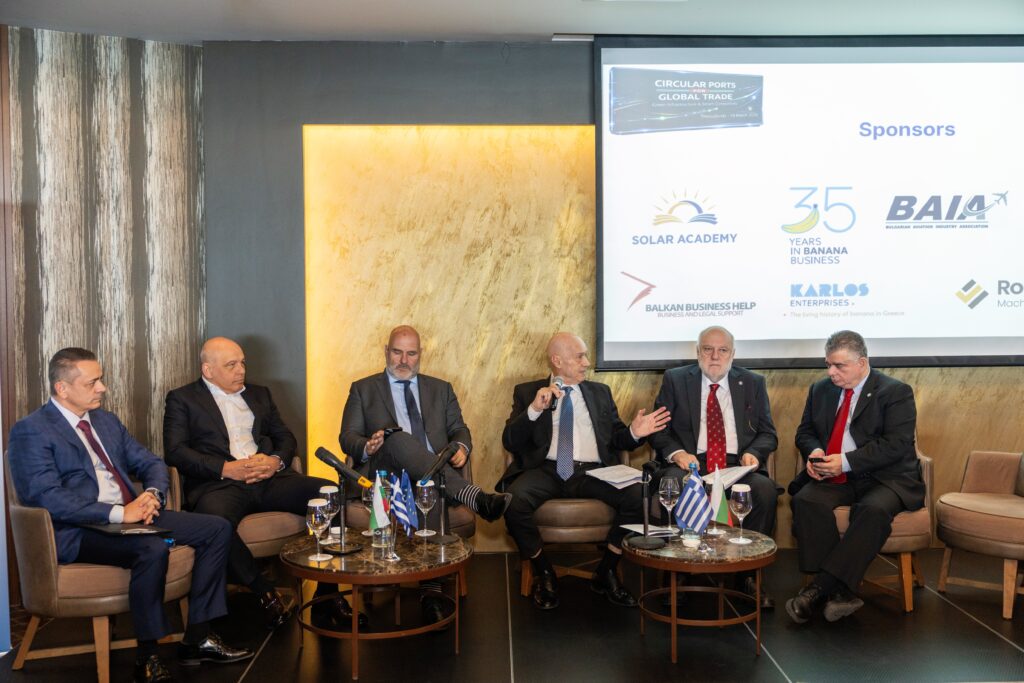
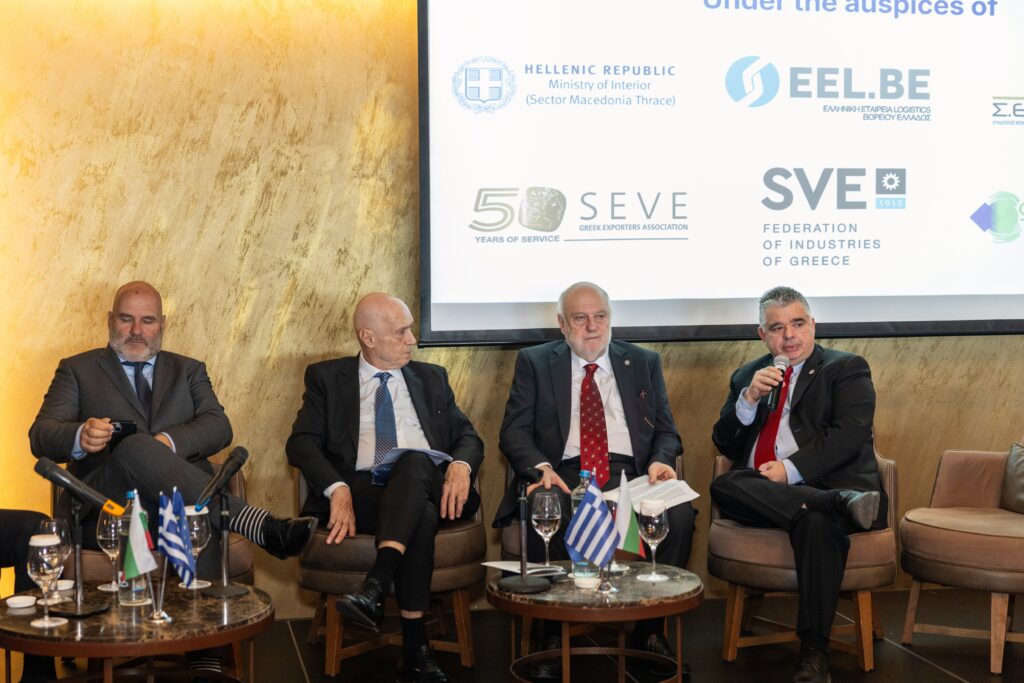
As co-organizer of the event, the Greek Association of Supply Chain Management contributed to the dialogue on the future of ports, multimodal logistics, and regional trade connectivity, with the participation of its President in the panel discussion on the strategic importance and implementation challenges of the Aegean–Black Sea / Baltic Sea – Black Sea – Aegean Sea corridor.
Greek Association of Supply Chain Management at Circular Ports
The event created an important platform for discussing how ports, logistics systems, and cross-border infrastructure can strengthen resilience, sustainability, and competitiveness in Southeast Europe. From the perspective of the logistics industry, the discussion was not limited to infrastructure alone. The central question was how to turn strategic geography into real supply chain value.
During the panel intervention, the President of the Greek Association of Supply Chain Management highlighted the importance of viewing the corridor not as a collection of individual assets, but as a functional logistics system linking Mediterranean shipping, Black Sea gateways, Balkan markets, and the wider Danube and Central European space.
Our intervention focused on three core messages
1. The Aegean–Black Sea corridor is strategically important because it can create a new North–South logistics axis
From a supply chain perspective, the corridor represents a major opportunity to connect the Mediterranean, the Black Sea, the Balkans, and Central Europe through a more diversified and resilient regional system.
At a time when global logistics is under pressure from geopolitical instability, war-related disruption, and concentration of trade on a limited number of routes, alternative corridor options become strategically more relevant. The role of the Aegean ports of Northern Greece and the Black Sea ports of Bulgaria and Romania is therefore not only geographic, but systemic.
Global cargo flows do not choose individual ports. They choose efficient logistics corridors.
2. The biggest challenge is turning a geopolitical vision into a commercially viable logistics reality
Strong political interest alone is not enough to create a functioning corridor. Cargo owners and logistics operators will only use this route if it proves faster, cheaper, or more reliable than existing alternatives.
The intervention underlined that the most critical structural weakness today is inland and cross-border rail connectivity. A viable corridor needs an efficient rail backbone, consistent operational performance, and lower friction between national systems. Without this, there is a real risk of creating a corridor that exists politically, but not commercially.
Infrastructure creates potential, but supply chains create reality.
3. Ports must collaborate as nodes of one corridor system, not compete as isolated terminals
A key point of the panel was that the real competition is no longer port versus port. It is corridor versus corridor. In that sense, Thessaloniki, Constanța, Burgas, Alexandroupolis, Kavala, and the wider regional network should be understood as complementary nodes with different but compatible roles.
When ports coordinate, support intermodal links, and improve digital visibility and planning across the chain, they become more attractive to shipping lines, freight operators, and cargo owners. If the system remains fragmented, flows will bypass the region. If it becomes integrated, the entire corridor gains competitiveness.
Ports are critical nodes, but global supply chains choose efficient corridors — not individual terminals.
A practical perspective from the logistics industry
The contribution of the Greek Association of Supply Chain Management to the panel emphasized a practical business-oriented approach. Corridor development must be based on real cargo demand, synchronized infrastructure investment, private sector participation, and stronger coordination across transport, customs, and logistics systems.
The region already has important assets: strategic ports, geographic position, access to the Balkan hinterland, and links to the Danube and wider European markets. The next step is to connect these assets more effectively so that the corridor evolves into a real engine of trade, resilience, and regional growth.
Acknowledgement
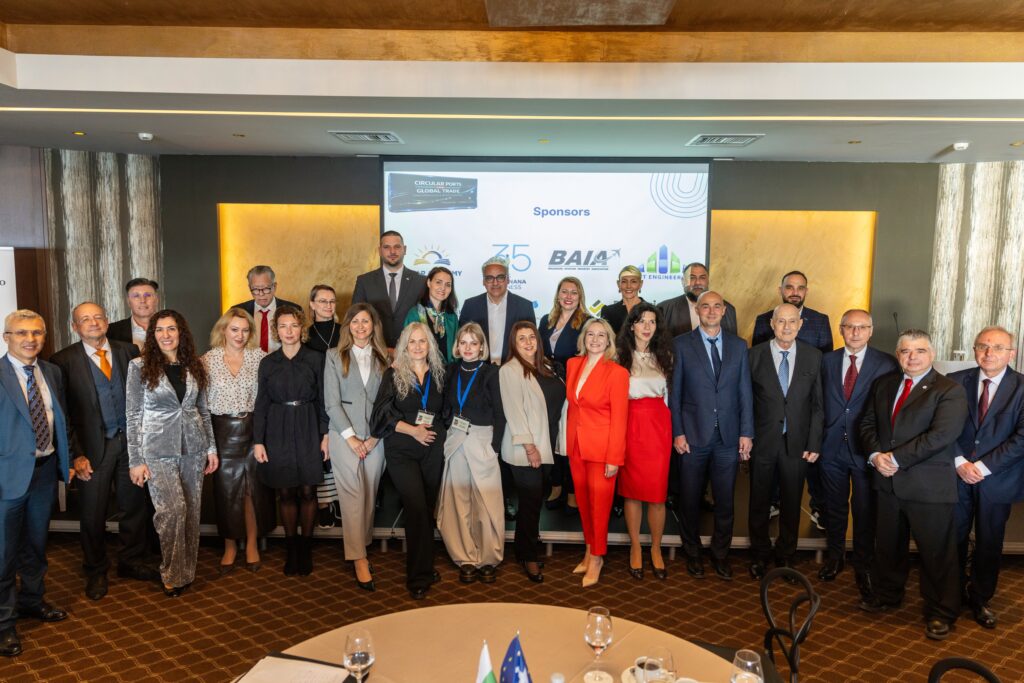
We thank all co-organizers, institutional participants, port stakeholders, speakers, and attendees who contributed to a timely and substantial discussion on the future of ports, logistics, and regional connectivity.
Greek Association of Supply Chain Management remains committed to supporting initiatives that connect infrastructure, logistics strategy, and real market needs in order to strengthen the role of Greece and the wider region in international trade flows.